Description
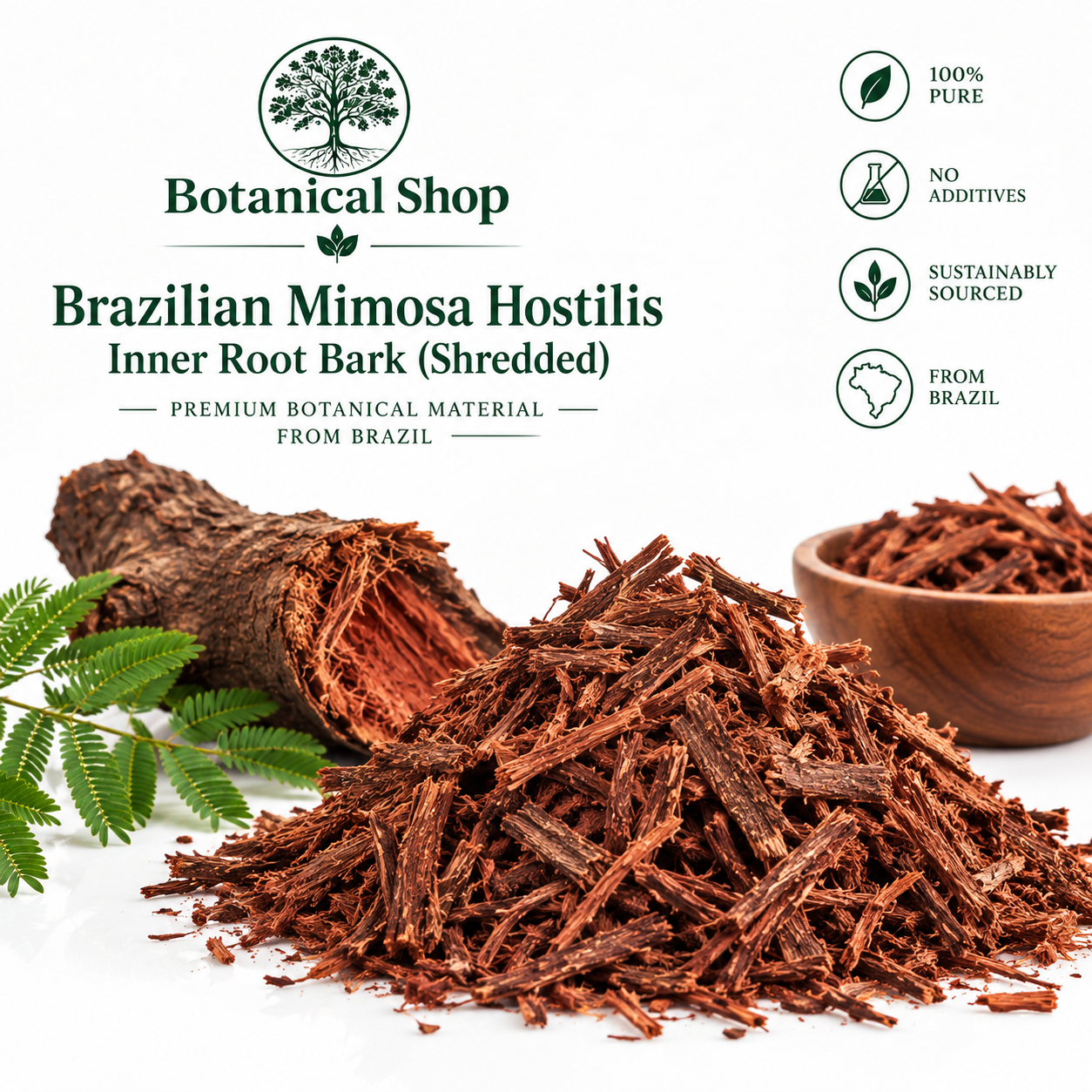
Brazilian Mimosa Hostilis Inner Root Bark (Shredded) — Premium Botanical Material from Brazil
If you are searching for authentic Brazilian Mimosa Hostilis inner root bark (shredded) for ethnobotanical research, botanical collection, or educational study, you have found the right source. Our premium shredded root bark comes directly from cultivated Mimosa hostilis trees grown in the nutrient-rich soils of northeastern Brazil — the native home of this remarkable plant species. We carefully harvest each batch, naturally dry it, and process it into uniform shreds without any additives, chemicals, or artificial processing.
This is Brazilian Mimosa Hostilis inner root bark (shredded) in its most authentic, minimally processed form — no additives, no chemicals, no artificial processing, and no fillers. It is perfect for ethnobotanical research, botanical collections, natural craft projects, and archival documentation. Additionally, we individually label every batch with origin and lot number for full traceability.
What Is Brazilian Mimosa Hostilis Inner Root Bark (Shredded)?
Mimosa hostilis, also known scientifically as Mimosa tenuiflora and by its synonym Acacia hostilis, is a perennial tree or shrub native to northeastern Brazil and southern Mexico, including the coastal region of Chiapas. It belongs to the Fabaceae (Leguminosae) family and is known by various regional names including Jurema Preta, Tepezcohuite, and Calumbi.
This tree adapts well to dry climates. It possesses small, alternating compound leaves and thorns, demonstrates remarkable resistance to drought, and regrows throughout the year. It most often occurs at lower altitudes but grows at elevations up to 1,000 meters (3,300 feet). Furthermore, it is a legume tree reaching 5 to 7 meters in height and has a high level of tannins, making it an important forage plant used to feed small ruminants in the “caatinga” (semi-desertic vegetation in the interior of Brazilian northeastern) during the dry season.
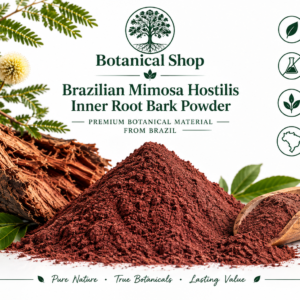
Moreover, the inner root bark of Mimosa hostilis is the most prized part of the plant. It features a rich reddish-brown color and fibrous texture. The bark contains a significant concentration of tannins (approximately 16%), making it widely used as a natural dye and in leather production. Its dye-rich properties make it valuable for coloring fabrics, natural fibers, and artisan projects.
Brazilian MHRB Inner Root Bark (Shredded) Characteristics
Beyond its practical applications, Brazilian Mimosa Hostilis inner root bark (shredded) has a long history of traditional use. In Mexico, it is known as Tepezcohuite and has been used for decades to support skin health. Studies of M. tenuiflora have shown potential in healing scar tissue. According to Mexican ethnobotanic sources, the direct application of the dried powdered bark to the lesion was an effective remedy for treating skin burns and wounds. Meanwhile, the population of the district of Palmeiras at Contendas of Sincorá (Bahia State, Brazil) uses the bark of M. tenuiflora for the treatment of coughs and wound healing.
Furthermore, this tree plays an important ecological role. It provides a valuable source of forage for livestock and bees, especially during the dry season, and contributes to soil fertility through nitrogen-fixing bacteria. Its wood is excellent for fuel, fencing, and construction due to its rot-resistant properties.
Key botanical facts:
-
Scientific name: Mimosa hostilis (syn. Mimosa tenuiflora, Acacia hostilis)
-
Family: Fabaceae (Leguminosae)
-
Common names: Jurema Preta, Tepezcohuite, Calumbi
-
Native range: Northeastern Brazil, Southern Mexico (Chiapas)
-
Growth habit: Perennial tree or shrub, reaching 5 to 7 meters
-
Part used: Inner root bark exclusively
-
Color: Rich reddish-brown
-
Texture: Fibrous, stringy
What Is Brazilian Mimosa Hostilis Inner Root Bark (Shredded)?
We produce Brazilian Mimosa Hostilis inner root bark (shredded) by carefully harvesting the inner root bark of mature Mimosa hostilis trees grown in northeastern Brazil. We then clean the bark, naturally dry it, and process it into uniform shreds — preserving the plant’s characteristic color, texture, and natural integrity.
Our Brazilian Mimosa Hostilis inner root bark (shredded) goes through the following process:
-
We select mature Mimosa hostilis trees from cultivated sources in northeastern Brazil
-
We carefully hand-harvest the inner root bark — inner bark only, no outer bark or stem material — using sustainable harvesting methods where we harvest only one root from each plant
-
We clean the bark to remove surface debris and foreign material
-
We slowly dry the material under natural conditions — no industrial ovens, no forced heat drying
-
We process the dried material into uniform shreds to create a consistent, manageable format
-
We hermetically seal every batch in moisture-resistant packaging and clearly label it with lot number, species name, origin, and form
As a result, the result is a premium shredded root bark that retains the plant’s characteristic deep reddish-brown color, fibrous texture, and natural integrity — exactly as serious botanical collectors and ethnobotanical researchers expect.
Why Choose Brazilian Mimosa Hostilis Inner Root Bark (Shredded)?
Both shredded and whole/powdered forms are available for buyers who want to add Brazilian Mimosa Hostilis inner root bark to their botanical collection or research archive. The right format depends on your specific purpose.
Select shredded bark if you:
-
Want a balance between whole bark and powder — easier to handle than whole, less processed than powder
-
Want to maintain visible plant structure for study
-
Need controlled portioning for research or craft projects
-
Are working on natural craft, botanical dye, or artisanal projects where texture and structure matter
-
Want a convenient format that reduces preparation time
Opt for whole material if you:
-
Want to preserve the original morphology of the inner root bark for visual and structural examination
-
Are building an ethnobotanical or botanical reference collection that values specimen authenticity
-
Prefer to process the material yourself to your required particle size
-
Want maximum shelf life from your botanical material
Pick powdered material if you:
-
Want a ready-to-use material with no additional processing required
-
Are working on formulations or projects requiring fine, consistent particle size
-
Need the smallest possible storage footprint per gram
-
Are preparing reference samples for documentation where uniform texture is important
Both formats come from the same cultivated Mimosa hostilis source material. Therefore, your intended application entirely determines the choice.
Quality Characteristics of Mimosa Hostilis Inner Root Bark (Shredded)
However, not all Mimosa Hostilis inner root bark (shredded) is produced to the same standard. Here is what sets our material apart and what you should look for when evaluating any MHRB specimen.
Color:
-
Rich reddish-brown to dark reddish-brown — the natural color of the inner root bark
-
Uniform color throughout each shred — no bleaching, browning, or discoloration
-
Slight natural variation between batches is normal and expected in genuine botanical material
Texture:
-
Fibrous and stringy — each shred holds its structure without crumbling
-
The inner surface retains its characteristic fibrous feel
-
Natural variation in thickness and shape is normal
Aroma:
-
Clean, mild, earthy botanical scent characteristic of dried root bark
-
No musty, sour, chemical, or fermented odor
-
The natural aroma fades slightly over time but remains detectable in properly stored material
Purity:
-
Zero additives, fillers, or artificial processing of any kind
-
No chemical extraction or concentration processes applied
-
No signs of mold, foreign material, or pesticide use
Batch labeling:
Every batch includes: Mimosa hostilis / Mimosa tenuiflora, lot number, origin (Brazil), form (shredded root bark), and packaging date.
Brazilian vs Mexican Mimosa Hostilis Inner Root Bark (Shredded)
Brazilian MHRB: typically thicker, more fibrous, and darker in appearance
Mexican MHRB: often lighter and more uniform in texture
We clearly label origin so buyers always receive the exact material they expect, without substitution or ambiguity.
Common Applications for Brazilian Mimosa Hostilis Inner Root Bark (Shredded)
Buyers source Brazilian Mimosa Hostilis inner root bark (shredded) for a wide range of legitimate botanical, educational, and creative purposes. The most common applications include:
Ethnobotanical research and collections: Researchers and institutions building reference collections of significant plant species regularly include Mimosa Hostilis inner root bark (shredded) as a key specimen. The shredded format allows for morphological examination and comparison with other Fabaceae species.
Botanical identification and taxonomy study: The visible color, texture, and structure of Brazilian Mimosa Hostilis inner root bark (shredded) make it a useful physical reference for plant identification projects and botanical taxonomy coursework.
Natural dye and pigment work: The rich reddish-brown color and high tannin content of MHRB make it of interest to natural dye practitioners and botanical pigment researchers working with plant-based color materials.
Artisanal and craft projects: Natural craft artists and artisans working with authentic botanical materials use Brazilian Mimosa Hostilis inner root bark (shredded) in decorative, sculptural, and handmade product applications.
Archival and documentation projects: Educators, historians, and archivists working with materials related to traditional Brazilian plant use maintain Brazilian Mimosa Hostilis inner root bark (shredded) specimens as physical reference documents alongside written and photographic records.
Academic herbarium collections: University and institutional plant collections include MHRB specimens for teaching purposes and long-term preservation of significant botanical species.
Storage Instructions
Proper storage is essential to maintain the color, texture, aroma, and structural integrity of your Brazilian Mimosa Hostilis inner root bark (shredded) over time.
-
Store in a sealed, airtight container — a glass jar with a tight lid or a vacuum-sealed bag is ideal
-
Keep in a cool, dark location away from direct sunlight and heat sources
-
Avoid humid environments — place a food-grade silica gel desiccant packet inside your storage container
-
Do not store near strongly scented materials, essential oils, or aromatic herbs — the bark can absorb surrounding odors
-
Label your container clearly: Mimosa hostilis / Mimosa tenuiflora · Brazilian MHRB · Shredded Inner Root Bark · Lot number · Date received
-
Ideal storage temperature: below 20°C (68°F)
-
Estimated shelf life: 24 to 36 months under optimal conditions
Under these conditions, your Mimosa Hostilis inner root bark (shredded) will retain its characteristic reddish-brown color, fibrous texture, and natural botanical aroma for well over two years.
Our Sourcing and Quality Commitment
At Botanical Shop, we source Mimosa Hostilis inner root bark (shredded) directly from cultivated specimens grown by local communities in northeastern Brazil. We do not source wild-harvested material.
Our suppliers use sustainable harvesting methods — they harvest only one root from each plant, unlike greedy suppliers who kill whole trees for all their roots. The pastures where our harvest comes from do not receive any chemical pesticides as the grass and herbs grow naturally during the rainy season and pests are naturally controlled by the six-month dry period. No chemicals are used during processing.
Every batch we receive goes through the following verification steps before we list it for sale:
-
Origin confirmation: cultivated Brazilian Mimosa hostilis, not wild-harvested
-
Physical inspection: color, texture, aroma, and structural integrity checked against quality benchmarks
-
Moisture check: material must be fully and evenly dried before shredding
-
Contamination check: no mold, foreign material, or signs of pesticide use
-
Batch labeling: every unit receives a unique lot number for full traceability
-
Packaging: hermetically sealed in moisture-resistant packaging immediately after shredding
Consequently, we work with communities that practice responsible, sustainable harvesting — respecting the natural growth cycles of mature Mimosa hostilis plants and ensuring that cultivation, not extraction from wild populations, is the basis of all our supply.
Compliance and Intended Use
Mimosa Hostilis Inner Root Bark (Shredded) — (Mimosa hostilis / Mimosa tenuiflora) — is sold strictly as a botanical specimen for educational, ethnobotanical, archival, collection, and reference purposes only.
This product is not intended for human consumption. The seller makes no claims regarding therapeutic, medicinal, psychoactive, or any other physiological properties of this material.
It is the sole and complete responsibility of the buyer to verify all applicable local, state, and federal laws regarding the purchase, possession, and use of this material before placing an order.
-
Botanical name: Mimosa hostilis (syn. Mimosa tenuiflora, Acacia hostilis)
-
Common name: Brazilian MHRB (Shredded Inner Root Bark)
-
Form: Shredded root bark
-
Origin: Brazil (northeastern)
-
Processing: Hand-harvested, sun-dried, shredded, no additives
-
Additives: None
Reviews
There are no reviews yet.